







Why Preschool Teachers Need Emotional Intelligence More Than Just Teaching Skills ❤️👩🏫
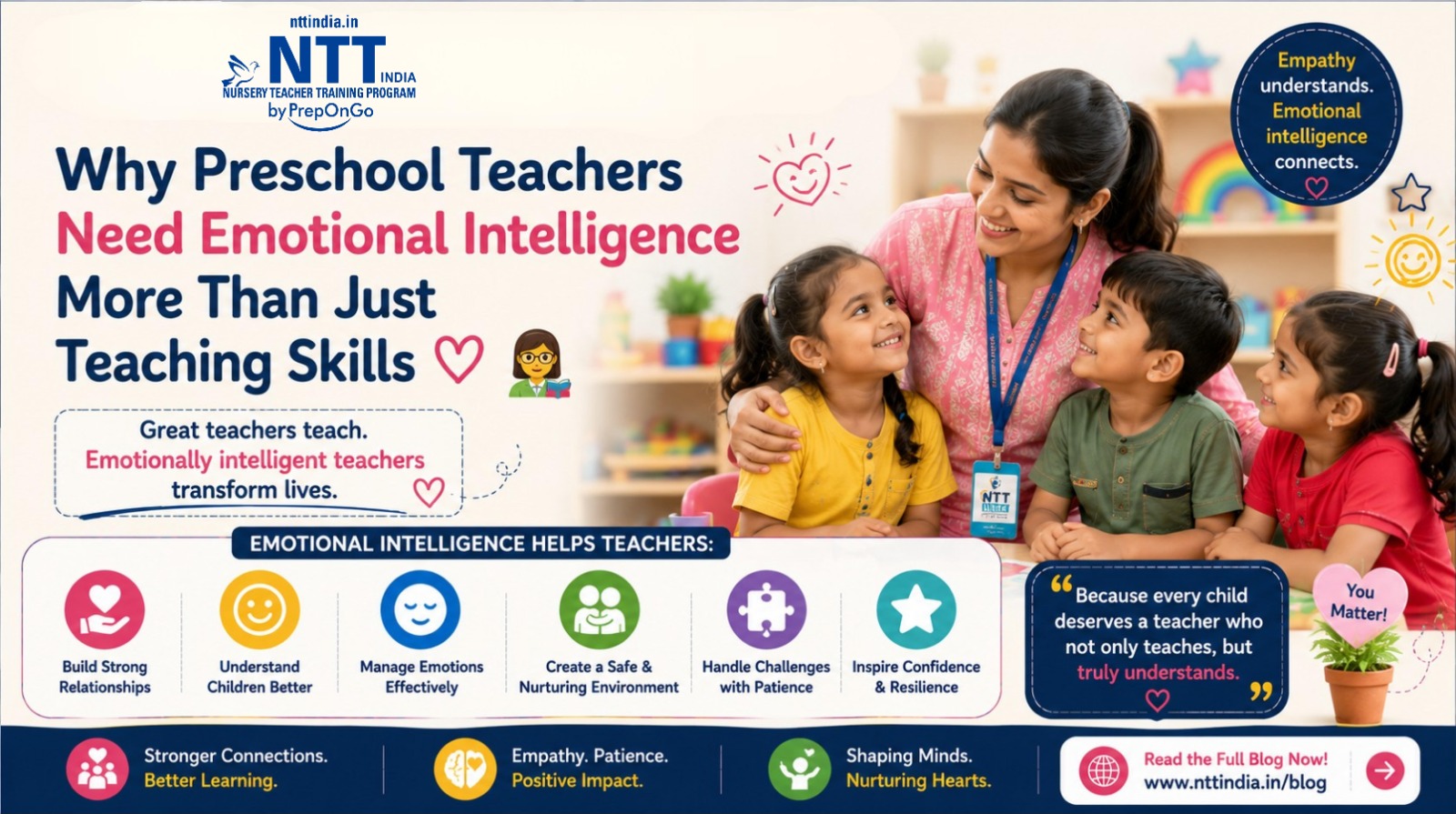
Why is emotional intelligence important for preschool teachers?
Emotional intelligence helps preschool teachers understand children’s emotions, manage classroom behavior positively, improve communication, and create emotionally safe learning environments for young learners.
Teaching preschool children is not only about:
📚 Alphabets
🔢 Numbers
🎨 Activities
It is also about:
❤️ Understanding emotions
❤️ Building trust
❤️ Creating comfort
❤️ Supporting emotional growth
A preschool classroom is full of emotions every single day.
One child may cry because they miss parents.
Another may feel shy.
Someone may feel frustrated.
Someone may feel overexcited.
And this is where one special skill becomes extremely important:
✨ Emotional Intelligence
Modern preschool teachers are expected to do much more than teach lessons.
They must understand:
✔️ Child emotions
✔️ Classroom feelings
✔️ Communication styles
✔️ Emotional behavior
At NTT India, emotional intelligence is considered one of the most important skills for future preschool educators.
Because children learn best when they feel:
✨ Safe
✨ Heard
✨ Comfortable
✨ Loved
🌈 What is Emotional Intelligence?
Emotional intelligence means:
👉 Understanding emotions — both your own and others’.
For preschool teachers, this includes:
✔️ Managing patience
✔️ Responding calmly
✔️ Understanding children’s feelings
✔️ Encouraging positive communication
🧠 Why Emotional Intelligence Matters in Preschool Education
Young children are still learning:
- How to express feelings
- How to communicate emotions
- How to manage frustration
Teachers become emotional guides during this important stage.
❤️ Signs of an Emotionally Intelligent Preschool Teacher
A good preschool teacher:
✨ Listens patiently
✨ Speaks calmly
✨ Encourages children gently
✨ Understands emotional behavior
✨ Creates a safe environment
Children feel emotionally connected to caring teachers.
🎯 Benefits of Emotional Intelligence in Classrooms
😊 1. Better Classroom Environment
Emotionally aware teachers create:
✔️ Positive classrooms
✔️ Happy learning spaces
✔️ Less stress for children
🤝 2. Improved Teacher-Child Bonding
Children trust teachers who:
✨ Understand feelings
✨ Show kindness
✨ Communicate positively
🎨 3. Better Learning Engagement
Emotionally comfortable children:
✔️ Participate more
✔️ Ask questions confidently
✔️ Learn more effectively
🌟 4. Helps Manage Tantrums Calmly
Preschool children often struggle to express emotions.
Emotionally intelligent teachers know how to:
✔️ Stay patient
✔️ Calm situations
✔️ Guide children positively
❤️ 5. Builds Emotional Confidence in Children
Children slowly learn:
✨ Empathy
✨ Patience
✨ Kindness
✨ Emotional expression
by observing teachers daily.
🏫 How NTT India Trains Future Teachers
At NTT India, teachers are trained in:
✅ Child psychology
✅ Emotional development
✅ Positive classroom interaction
✅ Communication skills
✅ Activity-based learning
The goal is to create educators who support both learning and emotional growth.
📢 CTA – Become a Modern Preschool Educator
🎓 Want to Build a Meaningful Teaching Career?
✨ Join NTT India’s ECCE Program Today
Learn modern preschool teaching skills with emotional intelligence ❤️
👨👩👧 Emotional Situations Preschool Teachers Handle Daily
Preschool classrooms are emotionally dynamic.
Teachers may handle:
😢 Separation anxiety
😡 Frustration
😴 Tiredness
😊 Excitement
🤝 Friendship conflicts
This is why emotional intelligence matters more than strict discipline.
🌈 How Teachers Can Improve Emotional Intelligence
✅ Practice Active Listening
Children feel valued when teachers listen patiently.
✅ Stay Calm During Challenging Moments
Children learn emotional behavior by observing adults.
✅ Encourage Emotional Expression
Ask children:
👉 “How are you feeling today?”
Simple conversations build emotional awareness.
✅ Appreciate Effort, Not Just Results
Positive encouragement builds confidence.
📱 Why Emotional Connection is Important Today
Modern children spend increasing time:
📱 On screens
🏠 Indoors
👤 With limited social interaction
Preschool teachers now play a major role in helping children:
✔️ Communicate
✔️ Socialize
✔️ Express emotions
🎨 Classroom Activities That Improve Emotional Development
Teachers can include:
✨ Emotion flashcards
✨ Circle Time discussions
✨ Role play activities
✨ Storytelling sessions
✨ Friendship games
These activities help children understand emotions naturally.
💡 Teacher Tips for Emotionally Positive Classrooms
✅ Use gentle communication
✅ Encourage participation
✅ Avoid public scolding
✅ Celebrate small achievements
✅ Build classroom trust
🌍 Why Modern Parents Prefer Emotionally Supportive Teachers
Today’s parents want more than academics.
They prefer teachers who:
❤️ Understand children
❤️ Build confidence
❤️ Communicate positively
❤️ Support emotional growth
🔗 Internal Linking Strategy
Add internal links naturally to:
- ECCE Course Page
- Child Psychology Blog
- Preschool Teaching Skills Blog
- Admission Page
Suggested Links:
❓ Frequently Asked Questions (FAQs)
1. What is emotional intelligence in teaching?
It is the ability to understand, manage, and respond positively to emotions in classrooms.
2. Why is emotional intelligence important for preschool teachers?
It helps teachers create emotionally safe, positive, and supportive learning environments.
3. Can emotional intelligence improve classroom behavior?
Yes. Calm and emotionally aware teachers handle classroom situations more positively.
4. What skills should preschool teachers have?
Preschool teachers should have:
✔️ Patience
✔️ Communication skills
✔️ Creativity
✔️ Emotional intelligence
5. How does NTT India prepare teachers?
NTT India trains teachers in:
✨ ECCE methods
✨ Child psychology
✨ Emotional development
✨ Classroom management
📝 Final Thoughts
Children may not always remember classroom lessons —
but they always remember how teachers made them feel ❤️
Emotionally intelligent teachers create classrooms where children:
✨ Feel safe
✨ Feel understood
✨ Feel confident
✨ Feel excited to learn
At NTT India, future educators are trained not only to teach —
but to inspire, support, and emotionally nurture young learners 🚀