







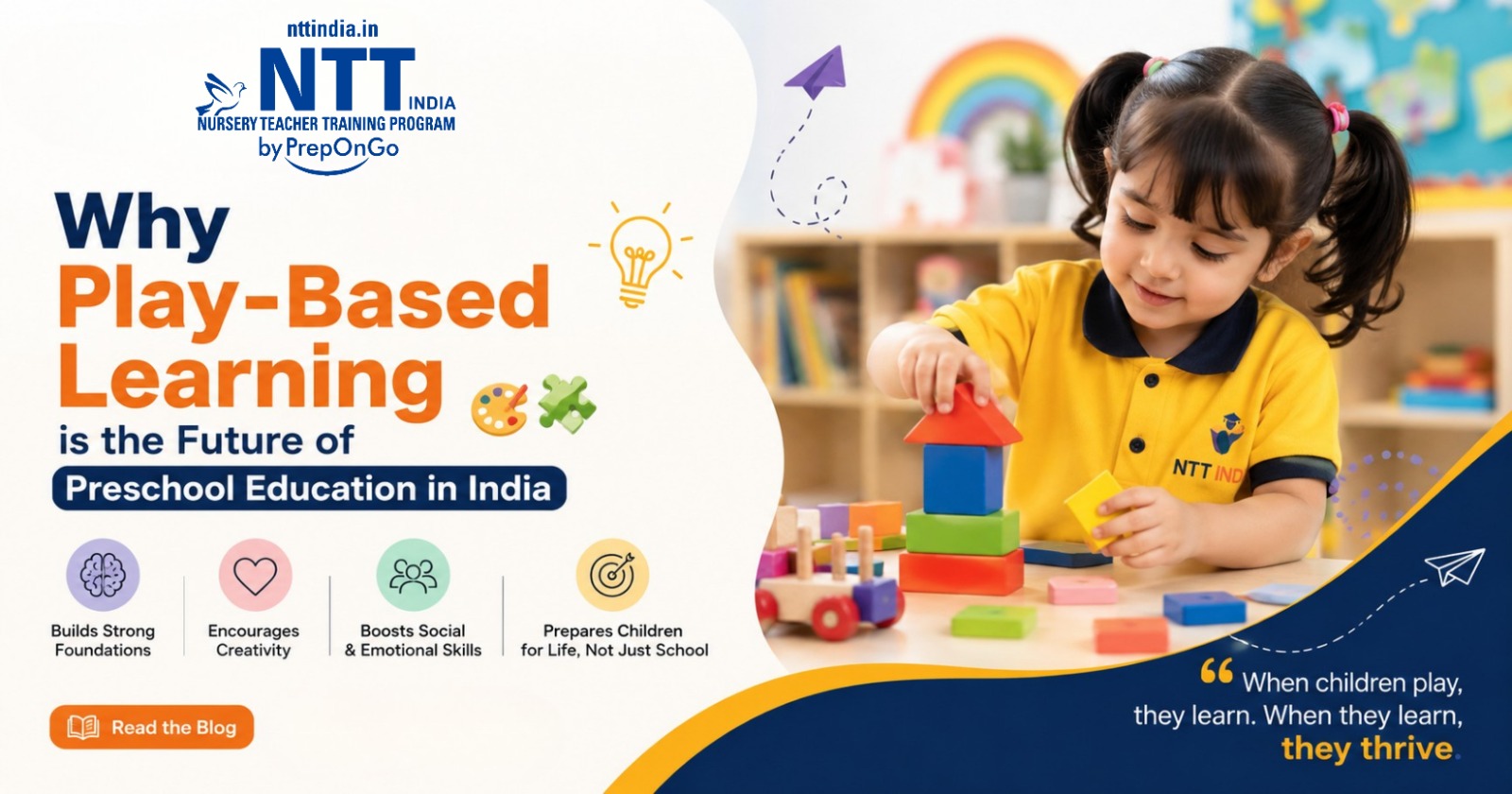
Why Play-Based Learning is the Future of Preschool Education in India
What is play-based learning in preschool education?
Play-based learning is a teaching approach where preschool children learn concepts, communication, creativity, and social skills through interactive games, activities, storytelling, and hands-on experiences instead of rote memorization
Ask any preschool child:
“Do you want to study?”
You may get:
Silence
Excuses
Running away
But ask:
“Do you want to PLAY?”
And suddenly:
Excitement everywhere!
This is exactly why modern preschool education is changing rapidly.
Today, children learn best when:
Learning feels fun
Activities feel natural
Classrooms feel interactive
This approach is called:
Play-Based Learning
And it is now considered one of the most effective early childhood teaching methods worldwide.
At NTT India, future preschool teachers are trained in activity-based and play-based learning techniques because children understand concepts better through:
Creativity
Music
Exploration
Interaction
rather than traditional rote learning.
What is Play-Based Learning?
Play-based learning means:
Children learn while playing.
Instead of:
Long lectures
Repetition
Pressure-based learning
children participate in:
Games
Role play
Storytelling
Creative activities
Hands-on exploration
This makes learning:
Enjoyable
Interactive
Memorable
Why Play is So Important for Preschool Children
For young children:
Play IS learning.
During play, children naturally develop:
Communication skills
Creativity
Social interaction
Emotional understanding
Problem-solving abilities
How Children Learn Through Play
Children absorb concepts better when they:
Touch
Explore
Move
Interact
Examples:
Puzzle games improve thinking
Role play improves communication
Art improves creativity
Benefits of Play-Based Learning
1. Makes Learning Fun
Children participate more when classrooms feel exciting.
Fun learning creates:
Better engagement
More confidence
Positive learning habits
2. Improves Brain Development
Interactive activities improve:
Observation
Thinking ability
Memory skills
3. Builds Social Skills
Group play teaches:
Sharing
Teamwork
Communication
Cooperation
4. Encourages Creativity
Open-ended activities help children:
Imagine
Express
Experiment
without fear of mistakes.
5. Supports Emotional Development
Children express feelings more naturally during play.
This improves:
Emotional confidence
Self-expression
Social comfort
How NTT India Trains Teachers in Modern Teaching Methods
At NTT India, future educators learn:
Activity-based learning
Storytelling techniques
Sensory learning
Classroom engagement
Child psychology
because modern classrooms require:
Creative teachers
Interactive learning
Emotionally supportive environments
CTA – Become a Modern Preschool Teacher
Want to Learn Interactive Preschool Teaching Methods?
Join NTT India’s ECCE Program Today
Build joyful learning experiences for children
Fun Play-Based Activities Preschool Teachers Can Try
1. Pretend Play Corners
Set up:
Doctor clinics
Grocery stores
Kitchen areas
Role play improves:
Confidence
Communication
Imagination
2. Sensory Play Stations
Use:
Sand
Water
Foam
Clay
Sensory activities improve brain development naturally.
3. Music & Movement Games
Children love:
Dance
Action rhymes
Freeze games
Movement supports:
Coordination
Focus
Energy release
4. Storytelling Activities
Stories help children:
Improve vocabulary
Imagine creatively
Understand emotions
Why Parents Prefer Play-Based Preschools Today
Modern parents now understand that preschool learning should not feel stressful.
Parents increasingly prefer:
Interactive classrooms
Creative learning
Child-friendly teaching
because children learn better emotionally and socially this way.
Parent Tips to Encourage Play-Based Learning at Home
Allow Free Play Time
Children need unstructured play for creativity.
Reduce Screen Time
Encourage:
Art
Stories
Games
Outdoor play
instead of excessive mobile use.
Appreciate Creativity
Avoid correcting every small mistake.
Let children explore freely 😊
Why Traditional Learning Alone No Longer Works
Modern children:
Learn visually
Need interaction
Prefer activity-based engagement
Long passive learning sessions often reduce attention and interest.
Teacher Tips for Better Play-Based Learning
Keep activities interactive
Use colorful materials
Encourage participation
Avoid over-instruction
Focus on exploration
Internal Linking Strategy
Add internal links naturally to:
- ECCE Course Page
- Preschool Teaching Methods Blogs
- Child Psychology Blogs
- Admission Page
Suggested Links:
Frequently Asked Questions (FAQs)
1. What is play-based learning?
It is a teaching approach where children learn through activities, games, and interaction.
2. Why is play important in preschool education?
Play improves:
Creativity
Communication
Emotional development
Brain growth
3. How do teachers use play-based learning?
Teachers use:
Activities
Music
Stories
Games
Role play
to teach concepts naturally.
4. Is play-based learning effective?
Yes. Research shows children learn better through active engagement and exploration.
5. How does NTT India help aspiring teachers?
NTT India trains teachers in:
ECCE methods
Activity-based learning
Child psychology
Creative classroom techniques
Final Thoughts
For preschool children:
✨ Play is not a distraction from learning —
it IS learning ❤️
The best classrooms are not silent classrooms.
They are filled with:
Creativity
Laughter
Exploration
Joyful interaction
At NTT India, future educators are trained to create learning experiences children genuinely enjoy and remember forever