





Why Today’s Preschool Teachers Need to Understand Children More Than They Teach Them
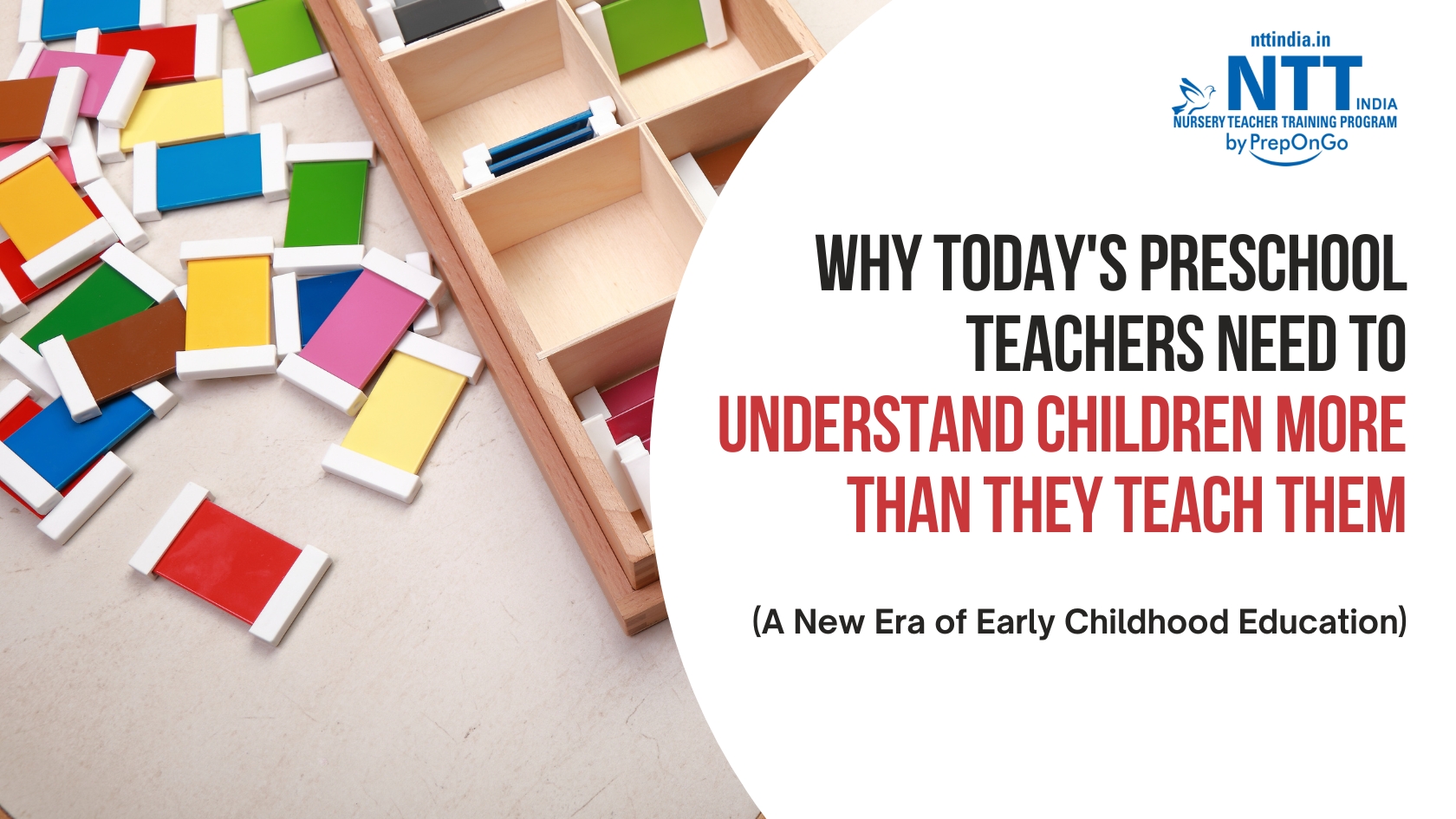
When people think about preschool teaching, they often imagine a classroom filled with alphabets, rhymes, flashcards, and colorful activities.
But ask any experienced preschool teacher what their day actually looks like, and you’ll hear a very different story.
One child refuses to leave their parent’s hand at the classroom door.
Another suddenly bursts into tears because someone sat in “their” chair.
A third child quietly sits in a corner, observing everyone but speaking to no one.
And before the first lesson even begins, the teacher has already solved three emotional situations.
This is why modern preschool education is changing.
Today, the most successful preschool teachers are not simply instructors. They are observers, communicators, guides, and emotional anchors.
In other words, they understand children before they teach them.
The Biggest Myth About Preschool Teaching
Many aspiring teachers believe preschool education is easier than teaching older students.
After all, preschool children don’t have board exams, complex mathematics, or lengthy assignments.
The reality is often the opposite.
Teaching a five-year-old requires understanding:
- Emotional development
- Attention spans
- Learning readiness
- Behavioural patterns
- Social interactions
- Family influences
A preschool teacher must constantly ask:
“Why is this child behaving this way?”
instead of immediately asking:
“How do I stop this behaviour?”
That shift in thinking changes everything.
Every Behaviour Has a Reason
Children rarely communicate their feelings directly.
Adults say:
“I am stressed.”
Children often show it.
A child who suddenly becomes disruptive may actually be:
- Feeling ignored
- Struggling with a recent change at home
- Finding a classroom task difficult
- Looking for attention
Similarly, a quiet child may not be shy at all.
They may simply need more time to feel safe.
The best preschool teachers learn to interpret behavior as communication.
Why Child Psychology Has Become Essential for Teachers
Ten years ago, many preschool teacher training programs focused heavily on activities and lesson planning.
Today, child psychology is becoming equally important.
Why?
Because classrooms have changed.
Children are growing up in a world filled with:
- Screens
- Fast-paced lifestyles
- Smaller family interactions
- Increased stimulation
- Changing parenting styles
Teachers who understand child development can respond more effectively to these modern challenges.
The Difference Between Managing Children and Understanding Them
Imagine two teachers.
Teacher A immediately scolds a child for interrupting.
Teacher B notices that the child interrupts only during group discussions and may be struggling to wait for their turn.
The first teacher manages behavior.
The second teacher understands behavior.
And understanding always creates better learning outcomes.
The Skills Future Preschool Teachers Must Develop
The future of preschool education belongs to teachers who can combine educational knowledge with emotional intelligence.
Some of the most valuable skills include:
Observation Skills
Children often reveal their learning style through play.
Communication Skills
Teachers must communicate effectively with both children and parents.
Emotional Awareness
Understanding emotions creates stronger teacher-child relationships.
Creativity
Every child learns differently.
Creative teaching helps reach more learners.
Adaptability
No two classrooms are ever the same.
What Parents Expect From Preschool Teachers Today
Modern parents are looking beyond academics.
They want teachers who can:
- Build confidence
- Encourage communication
- Develop social skills
- Support emotional growth
- Create a love for learning
This is one reason demand for professionally trained ECCE educators continues to grow across India.
Why Professional Training Matters More Than Ever
Many people believe teaching young children comes naturally.
While passion is important, professional training provides:
- Child development knowledge
- Classroom management strategies
- Behaviour guidance techniques
- Learning methodologies
- Parent communication skills
This is where structured ECCE programs make a significant difference.
How NTT India Prepares Teachers for Modern Classrooms?
At NTT India, the focus extends beyond traditional teaching techniques.
Future educators are trained in:
- Child psychology
- Early childhood development
- Activity-based learning
- Classroom engagement
- Creative teaching methods
- Parent communication
The objective is simple:
To prepare teachers for the realities of today’s preschool classrooms.
Frequently Asked Questions
Is preschool teaching a good career option in India?
Yes. With growing awareness of early childhood education and increasing preschool enrolments, qualified preschool teachers are in demand across India.
Why is child psychology important for preschool teachers?
It helps teachers understand behaviour, emotions, learning patterns, and developmental needs more effectively.
What qualifications are needed to become a preschool teacher?
An ECCE or Nursery Teacher Training qualification is one of the most preferred pathways.
Final Thoughts
Children may forget the activity completed on a Tuesday morning.
They may forget a worksheet.
They may even forget a lesson.
But they rarely forget how a teacher made them feel.
And perhaps that is the true responsibility of a preschool educator.
Before teaching children, we must first understand them.