







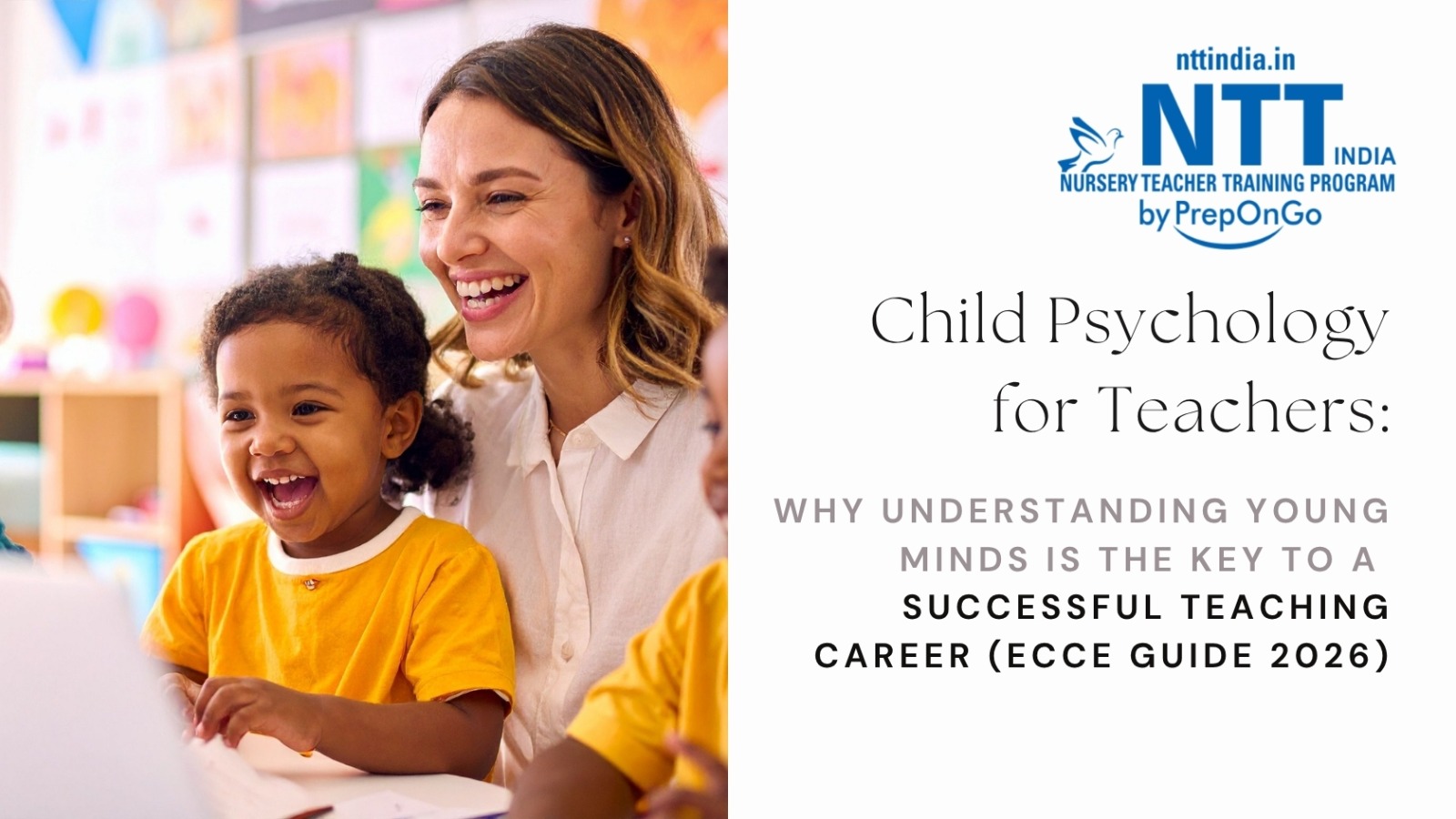
Child Psychology for Teachers: Why Understanding Young Minds is the Key to a Successful Teaching Career (ECCE Guide 2026)
Why is child psychology important for teachers?
Child psychology helps teachers understand children’s behavior, emotions, and learning patterns, enabling them to create effective teaching strategies and support overall development.
📝 Introduction
Teaching is not just about delivering lessons—it’s about understanding minds, especially when those minds are young, curious, and constantly evolving.
In early childhood education, one factor stands above all: child psychology.
A teacher who understands how a child thinks, feels, and learns can make a lasting impact. This is why child psychology is a core part of ECCE (Early Childhood Care and Education) programs offered by institutions like NTT India.
In this blog, we’ll explore why child psychology is essential for teachers, how it shapes learning, and how the ECCE diploma from NTT India prepares educators for real-world classrooms.
🧠 What is Child Psychology?
Child psychology is the study of:
- How children think
- How they learn
- How they behave
- How they develop emotionally and socially
It helps teachers understand why children act the way they do.
🎯 Why Child Psychology is Important in Teaching
1️⃣ Helps Understand Learning Patterns
Every child learns differently:
- Some are visual learners
- Some learn through play
- Some prefer interaction
👉 Understanding this helps teachers customize teaching methods.
2️⃣ Improves Classroom Management
Children can be:
- Energetic
- Emotional
- Easily distracted
A teacher trained in child psychology knows how to:
✔️ Handle behavior calmly
✔️ Maintain discipline positively
✔️ Create a safe learning space
3️⃣ Supports Emotional Development
Children experience emotions strongly but may not express them clearly.
Teachers can:
- Identify emotional needs
- Provide support
- Build confidence
4️⃣ Encourages Positive Learning Environment
A psychologically aware teacher creates:
- Stress-free classrooms
- Fun learning experiences
- Better student engagement
👶 Stages of Child Development (ECCE Perspective)
🍼 0–2 Years: Sensory Development
- Learning through touch and sound
👦 2–4 Years: Exploration Stage
- Curiosity and play-based learning
👧 4–6 Years: Learning & Social Stage
- Communication and interaction
👉 Teachers must adapt methods for each stage.
🎨 Role of Teachers in Child Psychology
Teachers act as:
- Observers
- Guides
- Emotional supporters
They help children:
✔️ Build confidence
✔️ Express emotions
✔️ Develop social skills
🏫 How NTT India Teaches Child Psychology
NTT India integrates child psychology deeply into its Diploma in ECCE program.
🌟 Key Learning Areas:
✔️ Child behavior analysis
✔️ Emotional intelligence training
✔️ Practical classroom scenarios
✔️ Activity-based teaching methods
🧩 Skills Developed Through ECCE Training
✔️ Patience and empathy
✔️ Communication skills
✔️ Observation ability
✔️ Problem-solving skills
📈 Real-Life Impact of Child Psychology in Teaching
Example:
A child not participating in class may not be “lazy”—they may be:
- Shy
- Anxious
- Lacking confidence
👉 A trained teacher identifies the issue and supports the child.
🚀 Career Advantages of Learning Child Psychology
- Better teaching effectiveness
- Higher employability
- Strong classroom management
- Career growth in education
🔗 Internal Linking Strategy
👉 Add links:
- Diploma in ECCE program → https://nttindia.in/
- Teacher training courses → https://nttindia.in/blog/
💡 Why Choose NTT India?
- Practical ECCE curriculum
- Focus on real classroom skills
- Expert faculty
- Career-oriented training
📝 Conclusion
Understanding child psychology is not optional—it’s essential.
It transforms teachers into mentors who truly understand children.
With the right training from NTT India, you can build a career that not only educates but inspires young minds.